Privacy policy
This Policy applies as between you, the User of this Web Site and Sorig Khang Italia APS the owner and provider of this Web Site. This Policy applies to our use of any and all Data collected by us in relation to your use of the Web Site and any Services or Systems therein.
1. Definitions and Interpretation
In this Policy the following terms shall have the following meanings:
"Account": means collectively the personal information, Payment Information and credentials used by Users to access Material and / or any communications System on the Web Site;
"Content": means any text, graphics, images, audio, video, software, data compilations and any other form of information capable of being stored in a computer that appears on or forms part of this Web Site;
"Cookie": means a small text file placed on your computer by Sorig Khang Italia APS Ltd when you visit certain parts of this Web Site. This allows us to identify recurring visitors and to analyse their browsing habits within the Web Site.
"Data": means collectively all information that you submit to the Web Site. This includes, but is not limited to, Account details and information submitted using any of our Services or Systems;
"Sorig Khang Italia APS": means Sorig Khang Italia APS, ADDRESS;
"Service": means collectively any online facilities, tools, services or information that Sorig Khang Italia APS makes available through the Web Site either now or in the future;
"System": means any online communications infrastructure that Sorig Khang Italia APS makes available through the Web Site either now or in the future. This includes, but is not limited to, web-based email, message boards, live chat facilities and email links;
"User" / "Users": means any third party that accesses the Web Site and is not employed by Sorig Khang Italia APS and acting in the course of their employment; and
"Website": means the website that you are currently using (vivere.sowarigpa.it) and any sub-domains of this site (e.g. subdomain.yourschool.com) unless expressly excluded by their own terms and conditions.
2. Data Collected
Without limitation, any of the following Data may be collected:
- 2.1 name;
- 2.2 date of birth;
- 2.3 job title & profession;
- 2.4 contact information such as email addresses and telephone numbers;
- 2.5 demographic information such as post code, preferences and interests;
- 2.6 financial information such as credit / debit card numbers;
- 2.7 IP address (automatically collected);
- 2.8 web browser type and version (automatically collected);
- 2.9 operating system (automatically collected);
- 2.10 a list of URLS starting with a referring site, your activity on this Web Site, and the site you exit to (automatically collected); and
- 2.11 Cookie information (see Clause 10 below).
3. Our Use of Data
- 3.1 Any personal Data you submit will be retained by Sorig Khang Italia APS for as long as you use the Services and Systems provided on the Web Site. Data that you may submit through any communications System that we may provide may be retained for a longer period of up to one year.
- 3.2 Unless we are obliged or permitted by law to do so, and subject to Clause 4, your Data will not be disclosed to third parties. This includes our affiliates and / or other companies within our group.
- 3.3 All personal Data is stored securely in accordance with the principles of the Data Protection Act 1998. For more details on security, see Clause 9 below.
- 3.4 Any or all of the above Data may be required by us from time to time in order to provide you with the best possible service and experience when using our Web Site. Specifically, Data may be used by us for the following reasons:
- 3.4.1 internal record keeping;
- 3.4.2 improvement of our products / services;
- 3.4.3 transmission by email of promotional materials that may be of interest to you;
- 3.4.4 contact for market research purposes which may be done using email, telephone, fax or mail. Such information may be used to customise or update the Web Site.
4. Third Party Web Sites and Services
Sorig Khang Italia APS may, from time to time, employ the services of other parties for dealing with matters that may include, but are not limited to, payment handling, delivery of purchased items, search engine facilities, advertising and marketing. The providers of such services do not have access to certain personal Data provided by Users of this Web Site. Any Data used by such parties is used only to the extent required by them to perform the services that Sorig Khang Italia APS requests. Any use for other purposes is strictly prohibited. Furthermore, any Data that is processed by third parties must be processed within the terms of this Policy and in accordance with the Data Protection Act 1998.
5. Changes of Business Ownership and Control
- 5.1 Sorig Khang Italia APS may, from time to time, expand or reduce its business and this may involve the sale of certain divisions or the transfer of control of certain divisions to other parties. Data provided by Users will, where it is relevant to any division so transferred, be transferred along with that division and the new owner or newly controlling party will, under the terms of this Policy, be permitted to use the Data for the purposes for which it was supplied by you.
- 5.2 In the event that any Data submitted by Users will be transferred in such a manner, you will be contacted in advance and informed of the changes. When contacted you will be given the choice to have your Data deleted or withheld from the new owner or controller.
6. Controlling Access to your Data
- 6.1 Wherever you are required to submit Data, you will be given options to restrict our use of that Data. This may include the following:
- 6.1.1 use of Data for direct marketing purposes; and
- 6.1.2 sharing Data with third parties.
7. Your Right to Withhold Information
- 7.1 You may access certain areas of the Web Site without providing any Data at all. However, to use all Services and Systems available on the Web Site you may be required to submit Account information or other Data.
- 7.2 You may restrict your internet browser’s use of Cookies. For more information see Clause 10 below.
8. Accessing your own Data
- 8.1 You may access your Account at any time to view or amend the Data. You may need to modify or update your Data if your circumstances change. Additional Data as to your marketing preferences may also be stored and you may change this at any time.
- 8.2 You have the right to ask for a copy of your personal Data on payment of a small fee.
9. Security
Data security is of great importance to Sorig Khang Italia APS and to protect your Data we have put in place suitable physical, electronic and managerial procedures to safeguard and secure Data collected online.
10. Changes to this Policy
Sorig Khang Italia APS reserves the right to change this Privacy Policy as we may deem necessary from time to time or as may be required by law. Any changes will be immediately posted on the Web Site and you are deemed to have accepted the terms of the Policy on your first use of the Web Site following the alterations.
11. Contacting Us
If there are any questions regarding this privacy policy you may contact us at italia@sorig.net
Now the website is in two languages
Language switcher with English Flag is below in the botton of the page
Trisong Detsen ཁྲི་སྲོང་ལྡེ་བཙན་

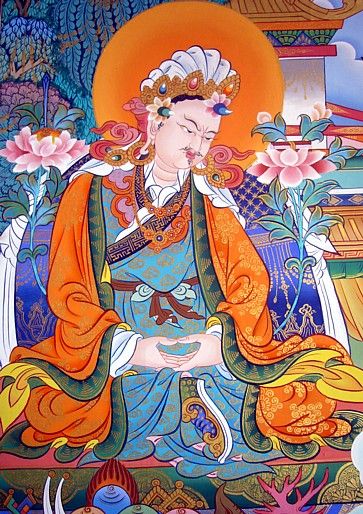
Trisong Detsen ཁྲི་སྲོང་ལྡེ་བཙན་ is the 38th King of Tibet. He ruled Tibet from 755 AD to 797 AD, and he retired after passing the throne to his second son. Trisong Detsen is one of the three Dharma Kings of Tibet, playing a significant role in Introducing Buddhism in Tibet.Trisong Detsen invites Great Indian master Sāntarakṣita and Guru Rinpoche from India to help establish Buddhism in Tibet. Thus subsequently founding the first and oldest sect of Tibetan Buddhism called Nyingmapa Sect with the Samye monastery as the first Buddhist Monastery in Tibet. Guru Rinpoche also help to initiate the first monkhood in Tibet with first seven sons from Noble birth.During the reign of Trisong Detsen, he organizes the first international medical conference of Medicine to introduce the Current Tibetan medicine system. The doctors from all over the known world came to participate including from Greece, China, Arab, India, and Nepal.Trisong Detsen also gathers many spiritual master and translator from India to train many translators to Translate all the Buddhist scripture from Indian to the Tibetan Language.Though facing much opposition from Bönpo follower to resist the change and introduction of Buddhism in Tibet. Besides all the hardship he was successful in establishing Buddhism as the official religion for his royal court and his empire.For Us, Tibetan Buddhist. We consider him as a very great king, and we are always grateful for him to inducing Buddhism in Tibet, which is now the core of Our Tibetan culture and tradition. Therefore during your travel to Tibet, you will find Trisong Detsen statue along with either Guru Rinpoche and śāntarakṣita or along with our other two kings of Songtsen Gampo.
Songtsen Gampo, སྲོང་བཙན་སྒམ་པོ་

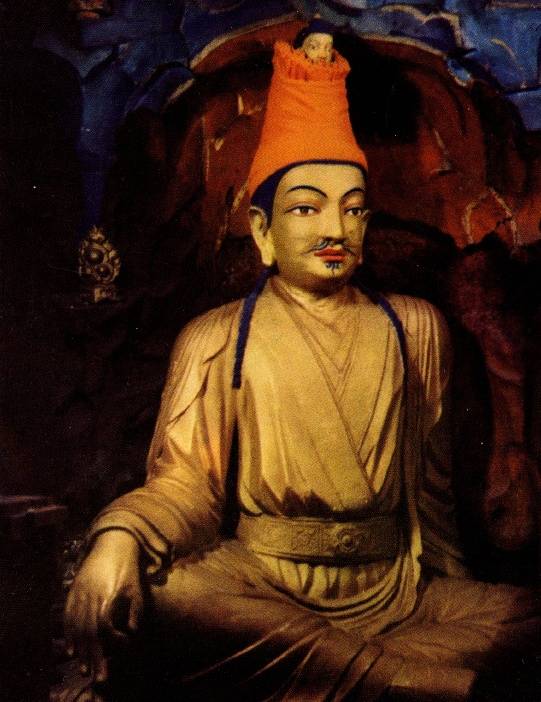
Songtsen Gampo is the forefather of Buddhism in Tibet. Two generations before King Trisong Detsen invited Shantarakshita and Padmasambhava to Tibet, King Songtsen Gampo cultivated the nation for its transformation, clearing pathways for the dharma to enter and ultimately permeate Tibetan culture. Without Songsten Gampo there would be no Tibetan alphabet, Lhasa would have no Jokang, and the supreme demoness of Central Tibet might still be roaming the earth unfettered.
Songtsen Gampo reigned from 617 to 650. His Yarlung dynasty was based in Central Tibet during an imperialist period in Tibetan history. Bön was the dominant religion, and Buddhism was only seminally present. No Tibetan translations of the Buddhist scriptures existed, partially because there was no written form of Tibetan, so Songsten Gampo instructed his minister Thonmi Sambota to travel to India, study Sanskrit, and develop a Tibetan script. He then commissioned the translation of several thousand texts.
His celebrated successes in battle expanded the Tibetan empire deep into Nepal and China, and it was during these battles that he gained an appreciation of the neighbouring cultures. As a reminder of the great empire that Songtsen Gampo ruled, a large pillar still stands before the Potala palace in Lhasa, erected during his reign, on which is inscribed the agreement between the Tibetan and Chinese rulers to respect each other’s borders. He studied Chinese, became skilled in the art of leadership, and most importantly, he adopted sacred codes of conduct from Buddhist scripture. Under his rule, sacred practices began to replace the shamanistic practices of the Bönpos.
Songtsen Gampo’s two queens can be credited for a great part of his cultural awareness. Bhirkuti, from Kathmandu, brought the traditions of Himalayan Buddhism. Princess Wengchin, daughter of the Tang emperor, brought a treasure trove of ancient Chinese wisdom. She travelled across the steppes to her husband with a collection of Chinese classic literature and texts on sacred astrology, geomancy, and medicine.
Many obstacles lay in Princess Wengchin’s path as she headed to Yarlung. She had a vision of a gargantuan demoness who lay sprawled across the Himalayas, so large that one limb lay in Paro, Bhutan and another lay in Western Tibet. When she arrived in Yarlung, she shared her vision with her new husband. Recognizing the value of the treasures that his bride brought to him, as well as the importance of her vision, King Songsten Gampo commissioned thirteen demoness-subjugating temples across the land, built over the demoness’s vital organs, ankles, wrists, and torso, forever binding her from wreaking havoc. The Lhasa Jokang was built over her heart centre, and Wengchin’s Buddha statue was placed inside, where it still resides. Other such temples are Trenduk Lhakhang in Tsetang and Paro Kyichu in Bhutan.
King Songtsen Gampo is considered a human emanation of Avalokiteshvara, and he was the grandfather of King Trisong Detsen. Songtsen Gampo meditated for several years in a cave that is now at the core of Potala palace, and is revered for his great patronage of Buddhism.
Through his enlightened leadership, the path was cleared for the dharma to be propagated throughout the provinces, and for Buddhism to flourish.
Ju Mipham Rinpoche ( འཇུ་མི་ཕམ་,

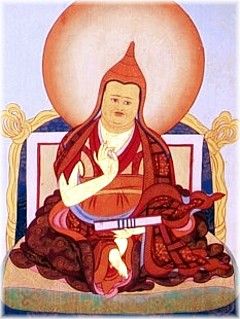
Ju Mipham Rinpoche (Tib. འཇུ་མི་ཕམ་, Wyl. 'ju mi pham) or Jamgön Mipham Gyatso (Tib. འཇམ་མགོན་མི་ཕམ་རྒྱ་མཚོ་, Wyl. 'jam mgon mi pham rgya mtsho) (1846-1912) — a great Nyingma master and writer of the last century, student of Jamgön Kongtrul, Jamyang Khyentsé Wangpo and Patrul Rinpoche. Blessed by Manjushri, he became one of the greatest scholars of his time. His collected works fill more than thirty volumes. His chief disciple was Shechen Gyaltsab Pema Namgyal.
Terma (གཏེར་མ་, Wyl. gter ma)

Terma (Tibetan: གཏེར་མ་, Wylie: gter ma; "hidden treasure") are various forms of hidden teachings that are key to Vajrayana or Tibetan Buddhist and Bon religious traditions. The belief is that these teachings were originally esoterically hidden by various adepts such as Padmasambhava and dakini such as Yeshe Tsogyal (consorts) during the 8th century, for future discovery at auspicious times by other adepts, who are known as tertöns. As such, terma represent a tradition of continuous revelation in Vajrayana or Tibetan Buddhism. Termas are a part of tantric literature.
1. Terma Tradition
1. Terma Tradition
Tradition holds that terma may be a physical object such as a text or ritual implement that is buried in the ground (or earth), hidden in a rock or crystal, secreted in a herb, or a tree, hidden in a lake (or water), or hidden in the sky (space). Though a literal understanding of terma is "hidden treasure", and sometimes refers to objects that are hidden away, the teachings associated should be understood as being 'concealed within the mind of the guru', that is, the true place of concealment is in the tertön's nature or essence of mind. If the concealed or encoded teaching or object is a text, it is often written in dakini script, a non-human type of code or writing that only a tertön can decipher.
In this way, one may see the tradition of terma and tertön as analogous to that of inspiration and providing a legitimate cultural forum to ensure continuation of tantric tradition, and ensuring Tibetan Buddhism's and Bön's continued relevancy in an evolving world.
The terma tradition is particularly prevalent in, and significant to, the Nyingma lineage. Two of the most famous tertön in the 20th century, Jigdral Yeshe Dorje (2nd Dudjom Rinpoche) and Dilgo Khyentse, were Nyingmapa. Tertön are also prevalent in Bön traditions and a few tertön have been Kagyupa.
Padmasambhava and his principal consorts and disciples secreted away and hid religious texts, ritual objects and relics etc., to secure and protect Buddhism during the time of decline under Langdarma. Some of these terma have been rediscovered and special terma lineages established throughout Tibet as a result. Out of this activity developed, especially within the Nyingma tradition, two ways of dharma transmission: the so-called "long oral transmission" from teacher to student in unbroken disciplic lineages, and the "short transmission" of terma. The foremost revealers of these terma were the Five Terton Kings and the Eight Lingpas. In the 19th century, some of the most famous were the Khenkong Choksum referring to Jamyang Khyentse Wangpo, Jamgon Kongtrul and Orgyen Chokgyur Lingpa.
Terma have been relayed by nāga and the dakini - of the underworld and the heavens, respectively - and have also been hidden by teachers such as the great translator Longchenpa. Sometimes terma are discovered by a master and reconcealed for a later tertön to find. (Encyclopedia: From Scholars for Scholars)
TEACHERS
LIZ SUNG
Write your awesome label here.
Liz Sung was raised in New York City and now based in Los Angeles, California. She is a practitioner of the Yuthok Nyingthig—a Vajrayana lineage of the Medicine Buddha—under the guidance of her main teacher Dr. Nida Chenagtsang, with whom she also studied Tibetan yoga and Sowa Rigpa (Traditional Tibetan Medicine). Influenced by her Korean heritage and the Mahayana Buddhist traditions of her upbringing, Liz began her dharma education under her first teacher in the Gelug lineage.
As the Yoga Director for the Sowa Rigpa Institute, Liz helped to develop the institute’s Sowa Rigpa Yoga curriculum integrating Tibetan medicine with Tibetan yoga. She holds certifications in Sowa Rigpa, Hatha yoga, trauma-informed yoga, and meditation.
Beyond this work, Liz has an extensive and diverse background in design and branding with over 18 years of experience in New York City and Los Angeles. Raised in a family of fine artists and entrepreneurs, she focuses on creativity, practical application, and thoughtful integration. In 2015, she founded SAMAYA, a meditation lifestyle brand based in Los Angeles, honoring ancient practices with a contemporary perspective.